
 By
By
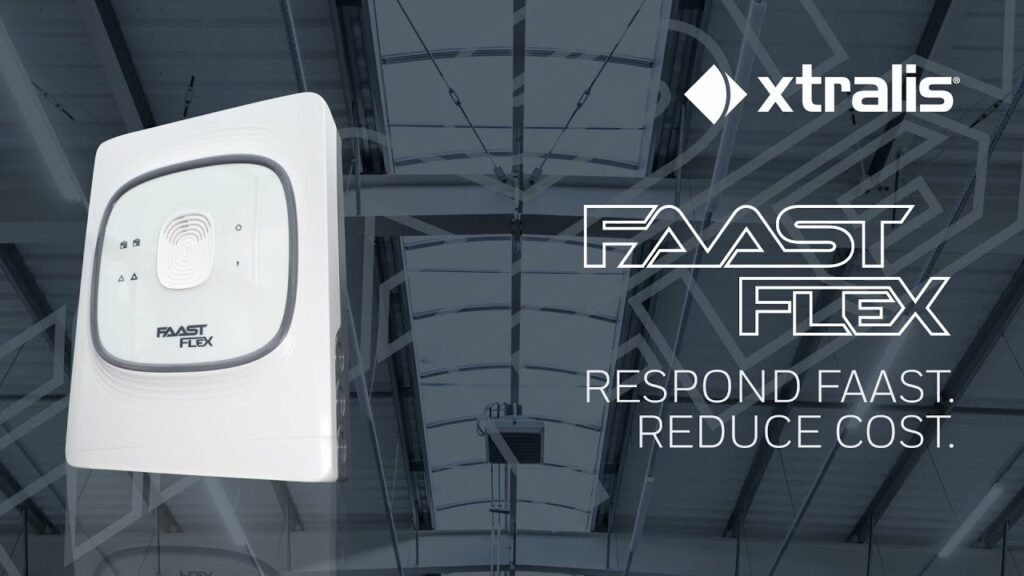
In modern building safety systems, early fire detection is no longer a luxury — it’s a necessity. The Xtralis FLX-010 FAAST (Fire Alarm Aspiration Sensing Technology) represents a cutting-edge solution designed to detect smoke at the earliest possible stage. This innovative system delivers precision, reliability, and speed — key elements in preventing fire disasters and ensuring occupant safety.
What is the Xtralis FLX-010 FAAST?
The Xtralis FLX-010 FAAST is an aspirating smoke detector (ASD) that uses advanced air sampling and laser-based detection technology to identify even the smallest traces of smoke. It continuously draws air from the protected environment through a network of sampling pipes, analyzing it for any signs of combustion particles.
This system is particularly suited for mission-critical environments — such as data centers, warehouses, museums, cleanrooms, and transportation hubs — where early warning can make the difference between a minor incident and catastrophic loss.
Key Features of the Xtralis FLX-010 FAAST
-
Ultra-Early Smoke Detection
The FAAST system can detect smoke particles before they become visible, giving facility managers precious time to respond. -
Intelligent Airflow Monitoring
The unit continuously monitors airflow for blockages, leaks, or system faults — ensuring consistent and reliable performance. -
High Sensitivity and Accuracy
The FLX-010 uses advanced laser detection technology to deliver highly accurate readings, minimizing false alarms. -
Flexible Integration
It integrates seamlessly with leading fire alarm control panels, security systems, and building management systems via Modbus and TCP/IP connectivity. -
User-Friendly Interface
With intuitive LEDs and status indicators, users can easily monitor system health, alarm levels, and airflow conditions. -
Wide Application Range
From IT environments to industrial facilities, the FAAST system adapts to diverse conditions — ensuring optimal protection in every scenario.
How It Works
The Xtralis FLX-010 FAAST employs aspirating smoke detection (ASD) principles. A fan draws air samples through a network of small, strategically placed pipes. These samples are then analyzed by a laser-based detection chamber capable of identifying minute levels of smoke. If smoke particles are detected, the system sends out early warning signals, allowing time for evacuation or corrective action before the fire spreads.
This proactive approach goes beyond traditional point detectors, which often respond only after visible smoke or heat accumulates.
Advantages Over Traditional Smoke Detectors
-
Early Response: Detects smoke at incipient stages.
-
Reduced False Alarms: Uses multi-level detection algorithms.
-
Ideal for Harsh Environments: Functions effectively in dusty or humid conditions.
-
Remote Monitoring: Compatible with network-based supervision and diagnostics.
-
Low Maintenance: Designed for long-term performance with minimal servicing needs.
Applications of the Xtralis FLX-010 FAAST
-
Data Centers & Server Rooms – Protects valuable IT assets from downtime and data loss.
-
Airports & Transport Hubs – Ensures safety in high-traffic public areas.
-
Cleanrooms & Laboratories – Maintains precision while avoiding contamination risks.
-
Museums & Archives – Safeguards irreplaceable artifacts and documents.
-
Warehouses & Industrial Plants – Detects early smoke in large, open areas.
Why Choose Xtralis FAAST Systems
Xtralis has long been a pioneer in the field of fire detection technology. The FLX-010 FAAST embodies the company’s commitment to innovation, safety, and performance. Its advanced sensing capabilities make it a trusted choice for engineers, safety professionals, and facility managers who require dependable early warning systems.
Conclusion
The Xtralis FLX-010 FAAST stands as a powerful example of how technology can save lives and property. With its intelligent design, early detection capabilities, and adaptable system integration, it is redefining fire safety standards across industries. Investing in this system means investing in peace of mind, reliability, and the protection of what matters most.